
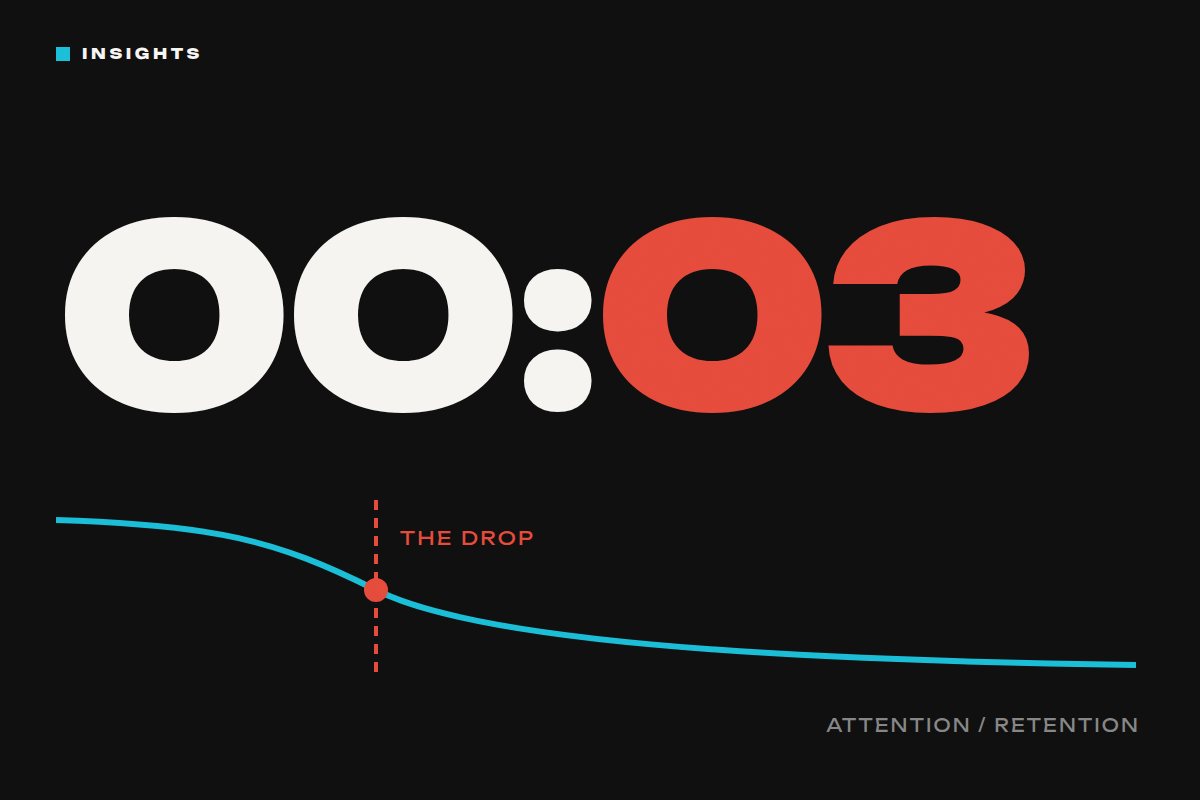
The First Three Seconds: Why Your Video Loses People Before Your Message Starts
Here is the uncomfortable truth about that beautiful brand video: most viewers never reached the part you care about. They left during the opening — the slow logo animation, the establishing shot, the “wait for it.” On a feed, waiting is not a thing people do.
The scroll decision
Short-form platforms trained audiences to evaluate instantly. Within the first moments, a viewer decides: is this for me? The platforms then read that behaviour — early exits tell the algorithm the content isn’t holding attention, which reduces distribution, which means fewer people ever get the chance to leave. The opening isn’t just the introduction. It is the gatekeeper of everything.
What a hook actually is
A hook is not a gimmick — it is the most interesting part of your video, moved to the front. The transformation shown before the process. The question before the answer. The boldest claim first, then the proof. Movement, a face, a pattern break — anything that gives the brain a reason to pause. If your video’s best moment is at second twenty, your edit is upside down.
Start with the reason to stay. Everything else is second.
Practical fixes we apply
Cut every opening that is about you instead of the viewer — logos, intros, throat-clearing. Put text on screen immediately; most feeds play muted. Design the first frame as a thumbnail, because it is one. Make one video about one thing — a clear promise holds better than a montage. And test hooks: same video, different opening three seconds, can perform completely differently.
What this means for brands
Stop judging videos by how they end and start judging them by how they begin. In every edit review at Ideative, the first question is not “is it beautiful?” It’s “why would anyone stop scrolling?” Answer that, and the rest of your production finally gets seen.
Video content and edits built for attention: Ideative Studio.

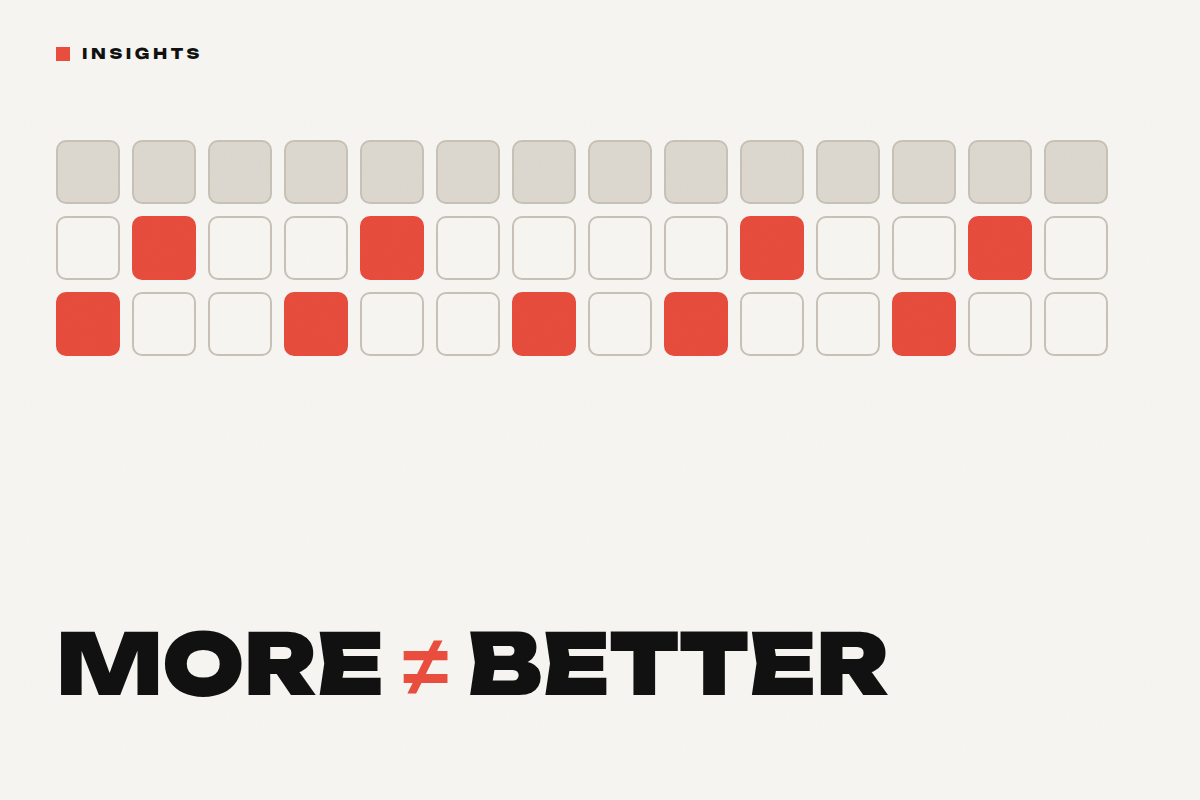
Why Posting Regularly Matters — And Why Posting Every Day Doesn’t
Post consistently — on a rhythm your team can sustain with quality. Posting daily only helps if every post earns its place. More is not a strategy.
“Should we post every day?” is one of the most common questions we get. The honest answer: probably not — and the fact that you are asking about frequency first is usually the real problem.
Why regularity works
Consistency does three things volume cannot. It builds recognition — the audience starts to know your voice, your look, your rhythm. It compounds — every post reinforces the last one instead of starting from zero. And it produces data — a regular stream of comparable content tells you what your audience actually responds to. Random bursts of activity, followed by silence, produce none of that.
Why daily posting backfires
When frequency becomes the goal, quality becomes the casualty. Teams start publishing to fill slots. The feed fills with content that exists because Tuesday exists. The audience feels the drop before you see it in the numbers — they stop saving, stop sharing, and eventually stop stopping.
Nobody follows a brand because it posts a lot. People follow brands that are worth hearing from.
Finding your rhythm
The right frequency is the intersection of three things: how much genuinely good content your brand can produce, what each platform rewards, and what your audience actually wants from you. For some brands that is five posts a week. For others, two strong posts beat seven forgettable ones — every time. When we build content plans, we would rather cut a post than publish filler, because every weak post spends a little of the audience’s attention for nothing.
What this means for brands
Stop asking “how often should we post?” and start asking “what is worth posting?” Build content pillars, set a rhythm you can sustain for six months, and let quality set the ceiling on quantity — never the other way around.
This is exactly the discipline behind our Social Media Management work.
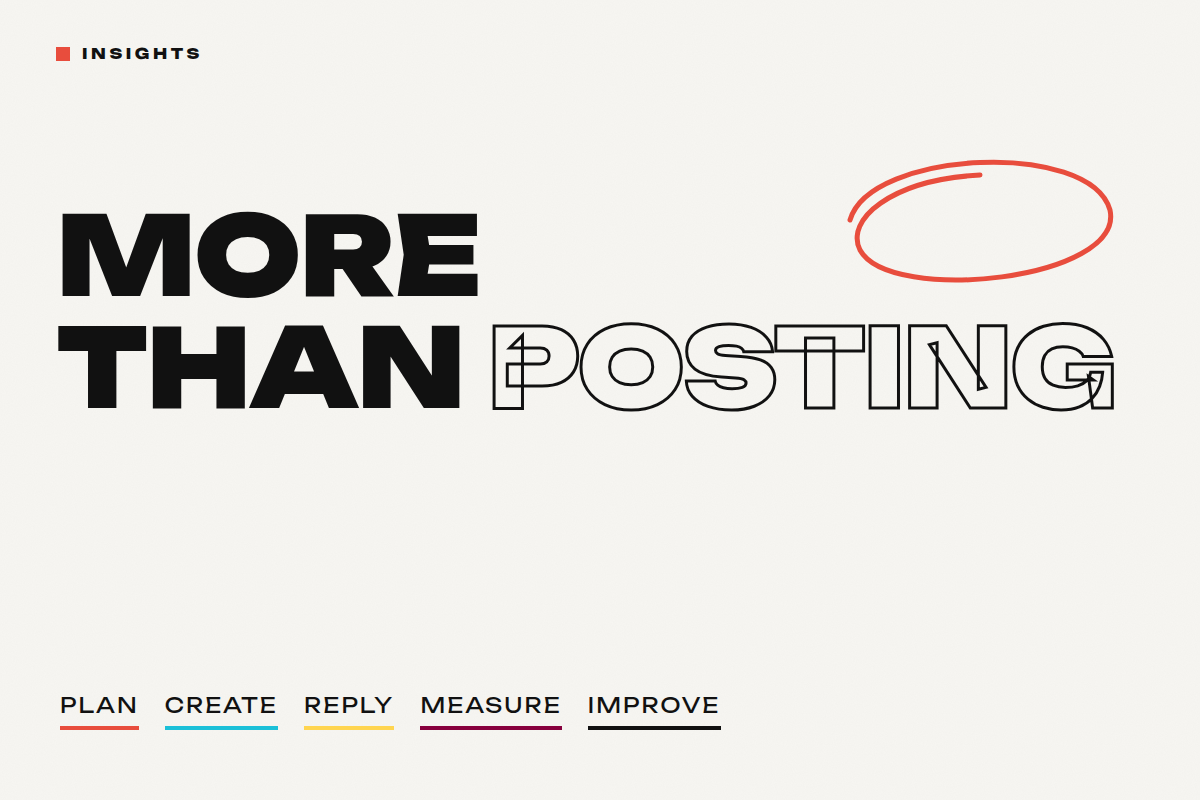
Why Social Media Management Matters More Than Just Posting
Posting is one small part of social media management. The real work is deciding what the brand should say, to whom, how often, in what voice — and then reading the data and improving every month.
Posting isn’t social media management. It’s one small part of it.
We say this in almost every first meeting, because most brands come to us thinking they need “someone to post.” What they actually need is someone to decide what is worth posting — and why.
What the audience never sees
Behind every account that feels consistent and alive, there is a layer of work the audience never sees: a strategy that defines what the brand talks about and what it stays away from, content pillars that stop the feed becoming random, a calendar that aligns content with launches, seasons and campaigns, copy written in one recognisable voice, design that follows the brand system, and community management that treats comments and DMs as part of the brand experience — not an afterthought.
Then there is the part most people skip entirely: reporting and optimisation. Looking at what performed, understanding why, and letting that change next month’s plan. Without that loop, an account just produces content. With it, the account learns.
An account that posts without a plan is busy. An account that is managed is going somewhere.
Why “just posting” quietly fails
A feed that is only fed, never managed, develops predictable symptoms. The content becomes reactive — whatever was available that week. The visual identity drifts because every post is designed in isolation. Engagement drops and nobody knows why, because nobody is measuring. And the account slowly stops looking like a brand and starts looking like a noticeboard.
None of this happens because the person posting is lazy. It happens because posting was treated as the job, when it is actually the last step of the job.
What this means for brands
If you are evaluating an agency — or your own internal team — don’t ask how many posts per month. Ask what the content pillars are. Ask how community messages are handled and how fast. Ask what changed in the strategy over the last three months because of performance data. The answers tell you whether the account is being managed or just filled.
Consistency, voice, community and learning — that is the job. Posting is simply the part you can see.
Ideative manages social media accounts end to end — strategy, content, community and reporting — for brands across Saudi Arabia. See our Social Media Management service.
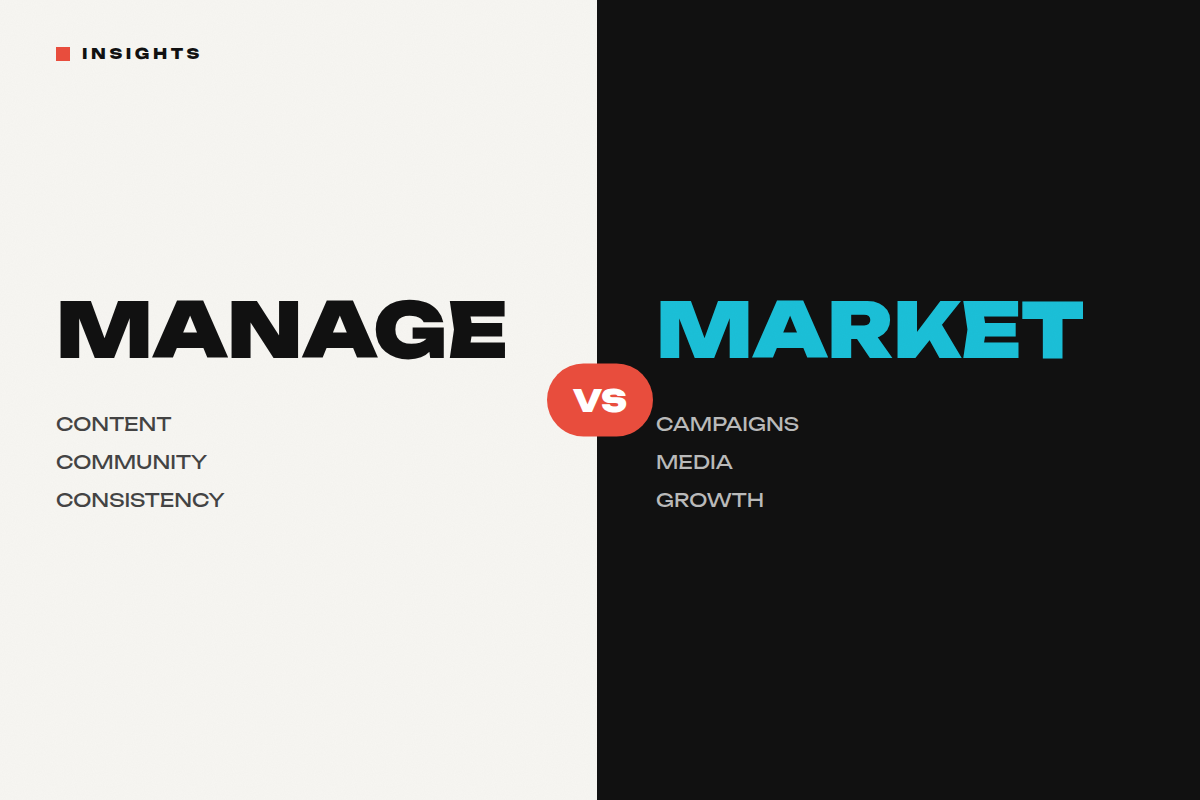
Social Media Management vs Social Media Marketing: What’s the Difference?
Management maintains and builds the brand’s ongoing presence: content, publishing, community, consistency. Marketing actively uses the platforms to achieve a business objective: campaigns, paid media, influencers, conversions. They overlap, but they are not the same job.
“But aren’t you already doing our social media?”
We hear this whenever we recommend a paid campaign to a client whose account we already manage. It is a fair question, and the confusion comes from one word — “social” — describing two different jobs.
Management is the presence
Social media management is everything that keeps a brand present, consistent and alive on its channels. Think of a restaurant account we manage: monthly content planning, photography, captions in the right voice, publishing on schedule, replying to comments and DMs, monthly reporting. The objective is long-term: familiarity, trust, and an audience that knows exactly who you are.
Marketing is the push
Social media marketing takes that presence and puts force behind it for a specific outcome. A product launch that needs reach beyond your followers. A seasonal campaign with a conversion target. An influencer collaboration built to reach a new audience. Paid media with defined objectives, audiences and budgets. The objective is specific and measurable, and it usually has a deadline.
Management builds the house. Marketing invites the city over.
A real example
When we ran the Saudi National Day campaign for Audela Perfumes, the ongoing account management did not stop — the daily presence continued. The campaign sat on top of it: a concept, custom fashion design, photography, art direction and content built for one cultural moment. Two jobs, running together, each doing what the other cannot.
What this means for brands
If your account is inconsistent, your problem is management. If your account is healthy but the business needs more — more reach, more leads, more sales — your next investment is marketing. And if someone sells you “social media” without asking which problem you have, ask more questions.
We do both — ongoing management and objective-driven campaigns. Explore Digital Marketing at Ideative or see how we build campaigns.
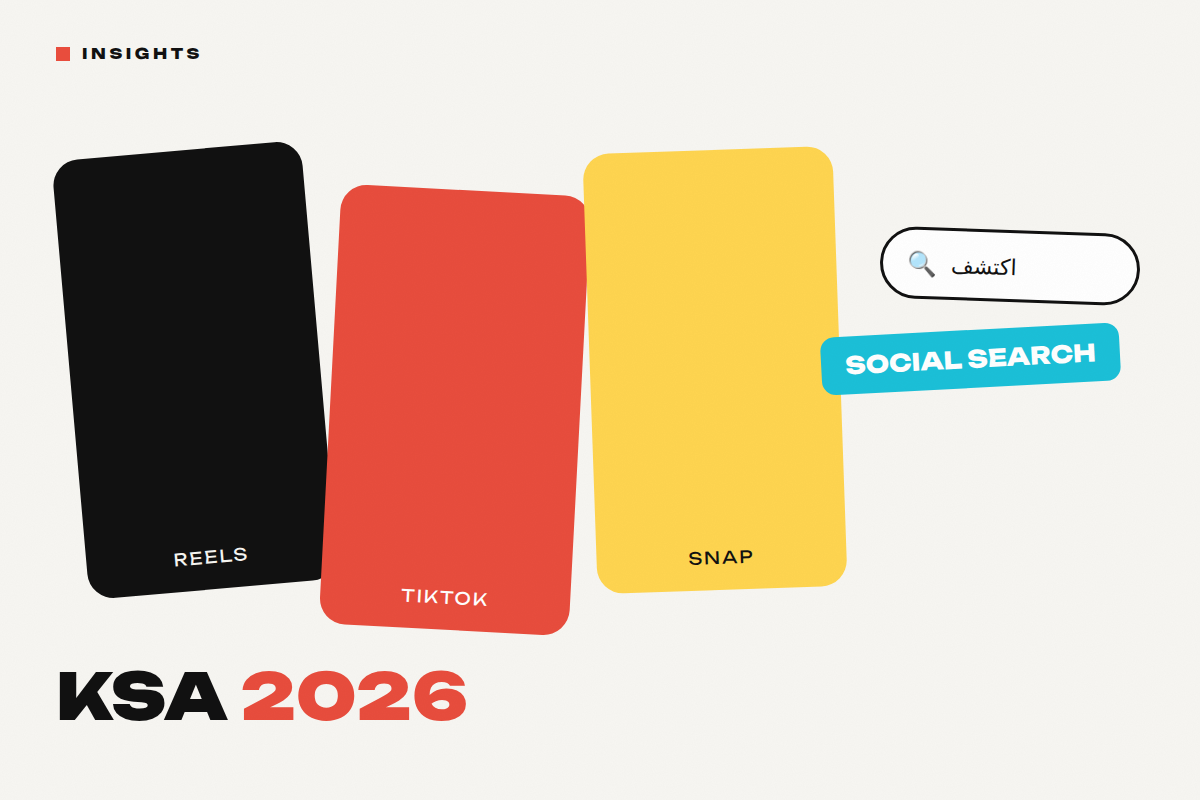
5 social media shifts Saudi brands cannot ignore this year
Every year the feed changes, and every year some brands keep posting like it is three years ago. Here are the five shifts we are seeing across our clients’ accounts in Saudi — backed by what the numbers, not the trends lists, say.
1. Lo-fi beats over-produced — but only with a strategy
Audiences skip anything that smells like an ad. Phone-shot, face-to-camera, behind-the-scenes content consistently outperforms polished commercials on reach — but it converts only when it sits on a real content strategy. Random authenticity is still random.
2. Saudi identity is the strongest creative angle
National Day, Founding Day, Riyadh Season, local humor, local dialect — content rooted in Saudi culture earns shares that generic global content never will. The winners are brands that celebrate the culture all year, not two days a year.
3. Search moved into the platforms
TikTok and Instagram are now discovery engines. Captions, on-screen text and audio all get indexed. Treat every post title like a search query — because for your customers, it is one.
4. Creators over celebrities
Mid-size Saudi creators with loyal niche audiences deliver better cost-per-result than mega influencers in almost every campaign we run. Fit beats fame.
5. Community is the new reach
Replies, DMs, polls, WhatsApp channels — the brands growing fastest treat social as a two-way room, not a billboard. Response time is now part of your brand identity.
Want your account run like this? See what we do or start a conversation.