
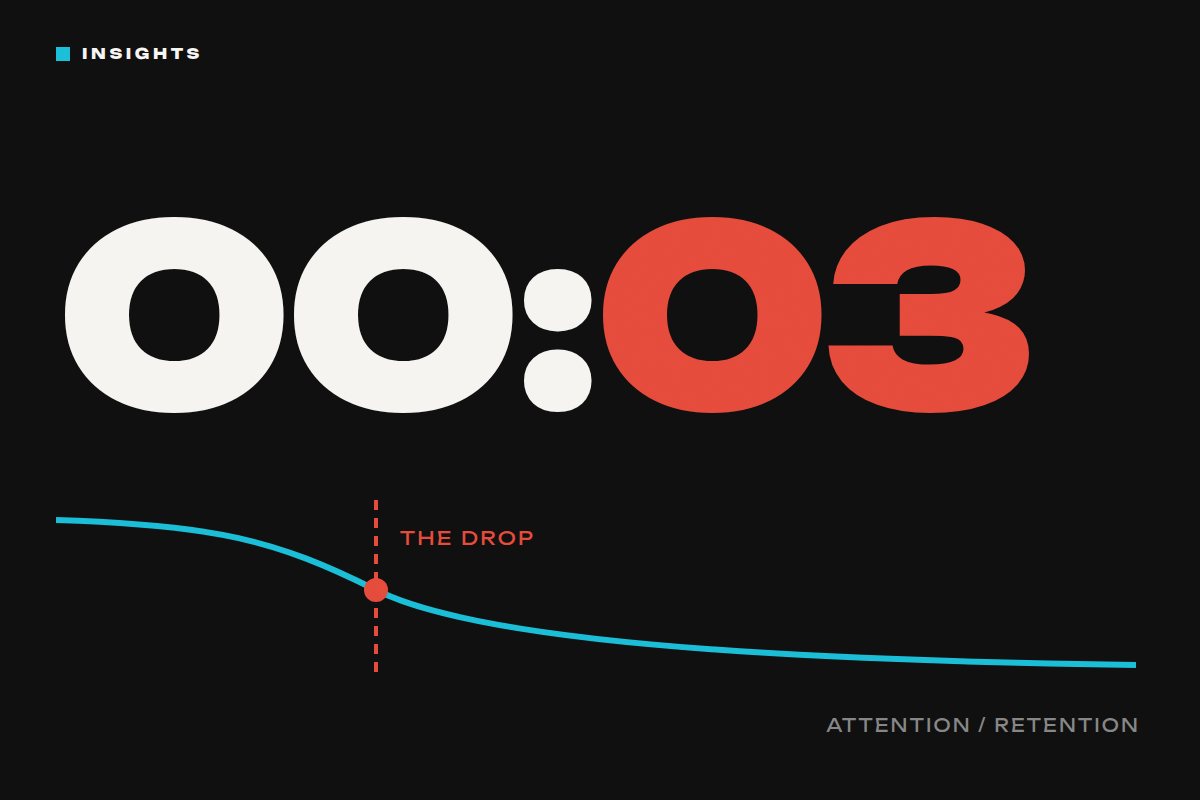
The First Three Seconds: Why Your Video Loses People Before Your Message Starts
Here is the uncomfortable truth about that beautiful brand video: most viewers never reached the part you care about. They left during the opening — the slow logo animation, the establishing shot, the “wait for it.” On a feed, waiting is not a thing people do.
The scroll decision
Short-form platforms trained audiences to evaluate instantly. Within the first moments, a viewer decides: is this for me? The platforms then read that behaviour — early exits tell the algorithm the content isn’t holding attention, which reduces distribution, which means fewer people ever get the chance to leave. The opening isn’t just the introduction. It is the gatekeeper of everything.
What a hook actually is
A hook is not a gimmick — it is the most interesting part of your video, moved to the front. The transformation shown before the process. The question before the answer. The boldest claim first, then the proof. Movement, a face, a pattern break — anything that gives the brain a reason to pause. If your video’s best moment is at second twenty, your edit is upside down.
Start with the reason to stay. Everything else is second.
Practical fixes we apply
Cut every opening that is about you instead of the viewer — logos, intros, throat-clearing. Put text on screen immediately; most feeds play muted. Design the first frame as a thumbnail, because it is one. Make one video about one thing — a clear promise holds better than a montage. And test hooks: same video, different opening three seconds, can perform completely differently.
What this means for brands
Stop judging videos by how they end and start judging them by how they begin. In every edit review at Ideative, the first question is not “is it beautiful?” It’s “why would anyone stop scrolling?” Answer that, and the rest of your production finally gets seen.
Video content and edits built for attention: Ideative Studio.

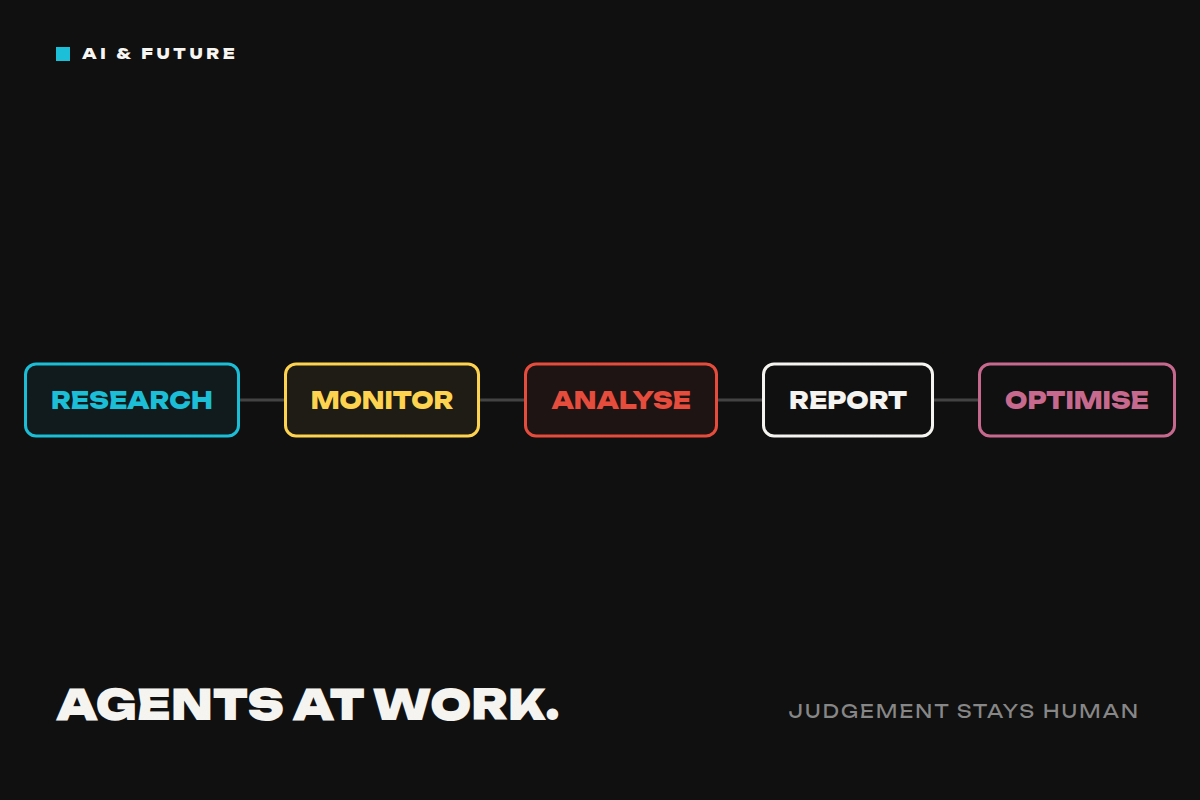
AI Agents Are Coming to Marketing Teams
The next wave of AI in marketing isn’t a better writing assistant. It’s software that works — agents that take a goal, break it into steps, use tools, and come back with the job done.
What agents will actually do
Picture the repetitive layer of any marketing team’s week: pulling performance data into reports, monitoring competitors’ launches and pricing, watching sentiment in comments, organising content calendars, flagging campaigns that need budget shifts, drafting first-pass analyses. All of it is structured, rule-based and constant — exactly the work agents are built for. Teams that adopt them will spend dramatically less time assembling information and more time acting on it.
Agents will do the work about the work. The work itself still needs a point of view.
What stays human
An agent can report that engagement dropped. It takes judgement to know whether that’s creative fatigue, the wrong audience, or a competitor’s campaign stealing attention — and what to do next. An agent can assemble a content calendar; it cannot decide that this Ramadan the brand should say something braver. Strategy, taste, cultural reading, client trust, creative direction — the closer a task sits to “what should we do and why,” the more human it remains.
How to prepare without the hype
Start small and specific: automate one report, one monitoring task, one repetitive workflow. Keep a human reviewing outputs — agents are confident even when wrong. And invest in the skills agents amplify rather than replace: clear strategy, strong creative standards, and clean data for the agents to work with. Brands with messy foundations will simply get messy work done faster.
What this means for brands
Don’t buy the fantasy that marketing runs itself now. Do take seriously that the cost of the routine layer is collapsing. The winning setup for the next few years looks the same everywhere: agents handling the repetitive layer, people making the calls that matter. Teams that get that balance right first will simply move faster than everyone else.
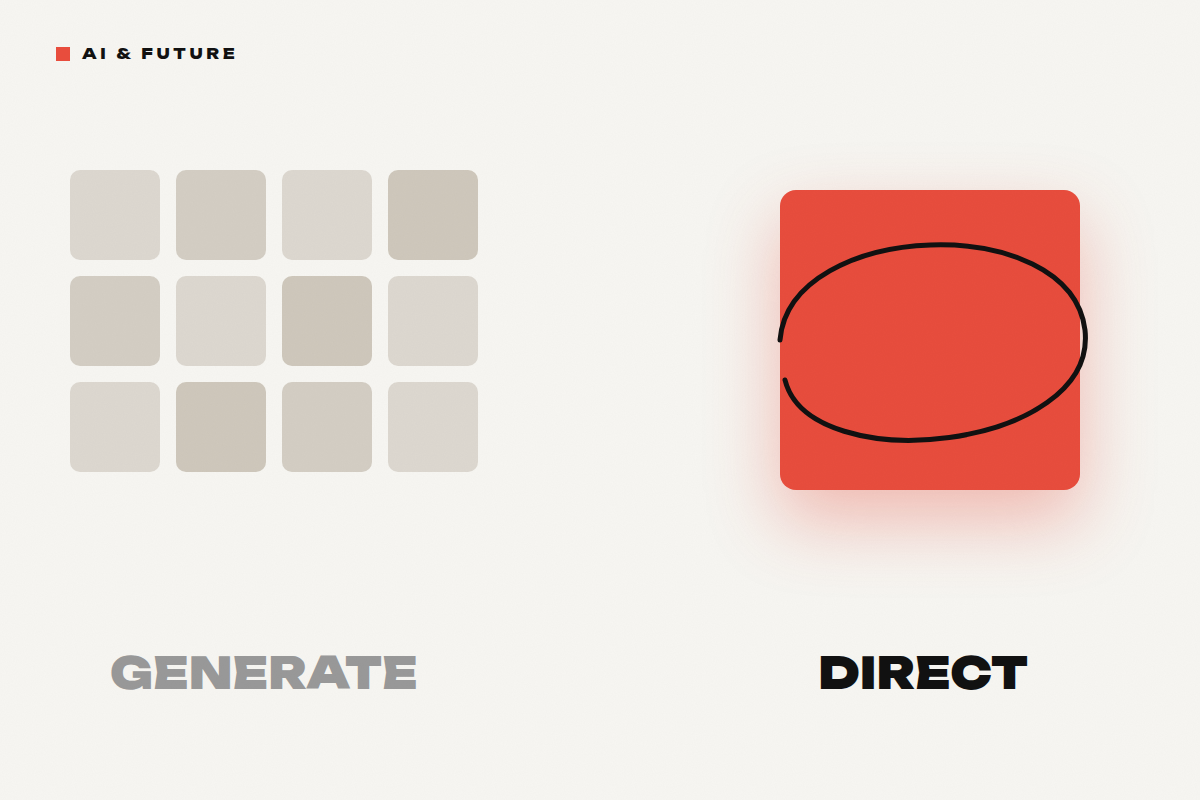
AI Can Create Content. So Why Do Brands Still Need Creative Teams?
Let’s be honest about something agencies don’t always say out loud: AI can now produce in minutes what used to take days. We use it ourselves. So the question clients ask is fair — if AI can generate the content, what exactly are we paying a creative team for?
What AI actually gives you
Volume, speed and competence. AI can draft captions, explore visual directions, produce variations, summarise research. The floor of acceptable content has never been higher or cheaper. But notice what happened the moment everyone got the same tools: everyone’s content started converging. Same phrasing, same look, same safe middle. When production is infinite, production stops being the advantage.
AI raised the floor. Taste is now the ceiling.
What AI doesn’t bring
Strategy: knowing what this brand, in this market, at this moment, should say — and should refuse to say. Cultural understanding: what resonates in Riyadh during Ramadan, what falls flat, what offends. Taste: choosing the one strong option from a hundred plausible ones. Art direction: the deliberate consistency that makes a brand recognisable. Judgement: knowing when the technically fine output is still wrong. These are exactly the things that decide whether content builds a brand or just fills a feed — and they don’t come with the subscription.
How we actually use it
At Ideative, AI supports research, ideation, exploration and production assistance. It makes our teams faster. It has never once decided what a campaign should stand for, or looked at a finished shoot and said “this frame — this is the one.” The tools generate. People direct.
What this means for brands
Use AI — seriously, do. But understand what game changed: when everyone can produce, distinctiveness becomes the scarce asset. The brands that win the AI era won’t be the ones that generate the most content. They’ll be the ones with the clearest point of view about what’s worth publishing.
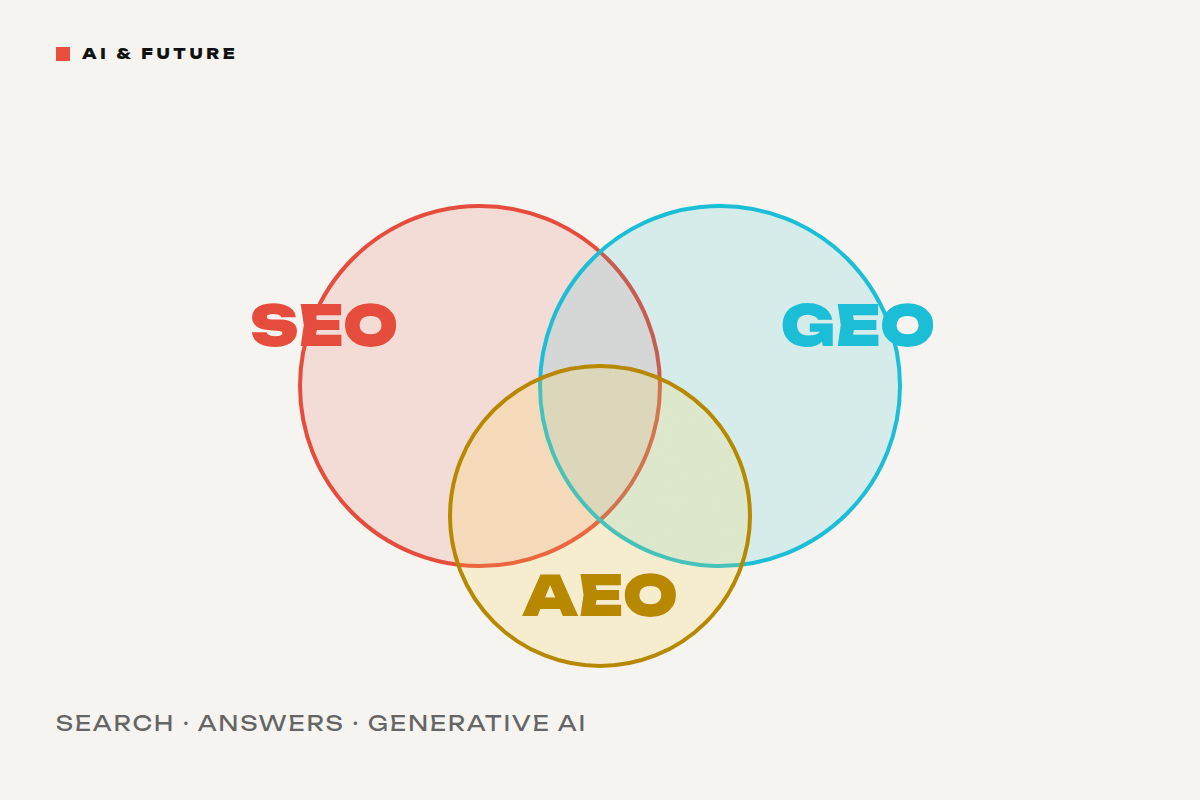
SEO vs GEO vs AEO: What Brands Need to Know
SEO gets you found in search engines. AEO gets your content used as the direct answer. GEO gets your brand understood — and mentioned — by generative AI. They stack; they don’t compete.
“Why isn’t my company appearing when I ask ChatGPT for recommendations?” A client asked us this last year, and it is quietly becoming one of the most important questions in marketing.
SEO — the classic layer
Search Engine Optimisation is the discipline you know: making your site technically sound, fast, structured and genuinely useful so search engines rank it. It still matters enormously — search engines remain a primary source of discovery, and everything else builds on this foundation.
AEO — the answer layer
Answer Engine Optimisation targets the moment when the user never clicks: featured snippets, answer boxes, voice assistants. It rewards content structured as direct answers — clear questions, concise responses, FAQ formats, structured data. If SEO is about being listed, AEO is about being quoted.
GEO — the generative layer
Generative Engine Optimisation is the newest: helping AI systems like ChatGPT, Gemini and Perplexity understand who you are, what you do, and why you are credible — so that when someone asks for “the best product photography in Riyadh,” your brand is part of the answer. It depends on a clear digital entity: consistent company information everywhere, authoritative content, real third-party mentions, reviews, and structured pages machines can parse confidently.
SEO gets you ranked. AEO gets you quoted. GEO gets you recommended.
What this means for brands
Don’t abandon SEO for the shiny new acronym — the three layers share the same foundation: clear structure, honest expertise, consistent information and content that answers real questions. Build that once, and every kind of search benefits. No agency can guarantee an AI will recommend you; anyone promising that is selling something else. What can be built is the foundation that makes recommendation possible.
Deeper dive: our GEO guide for the Saudi market.
What Makes a Campaign Different From Regular Content?
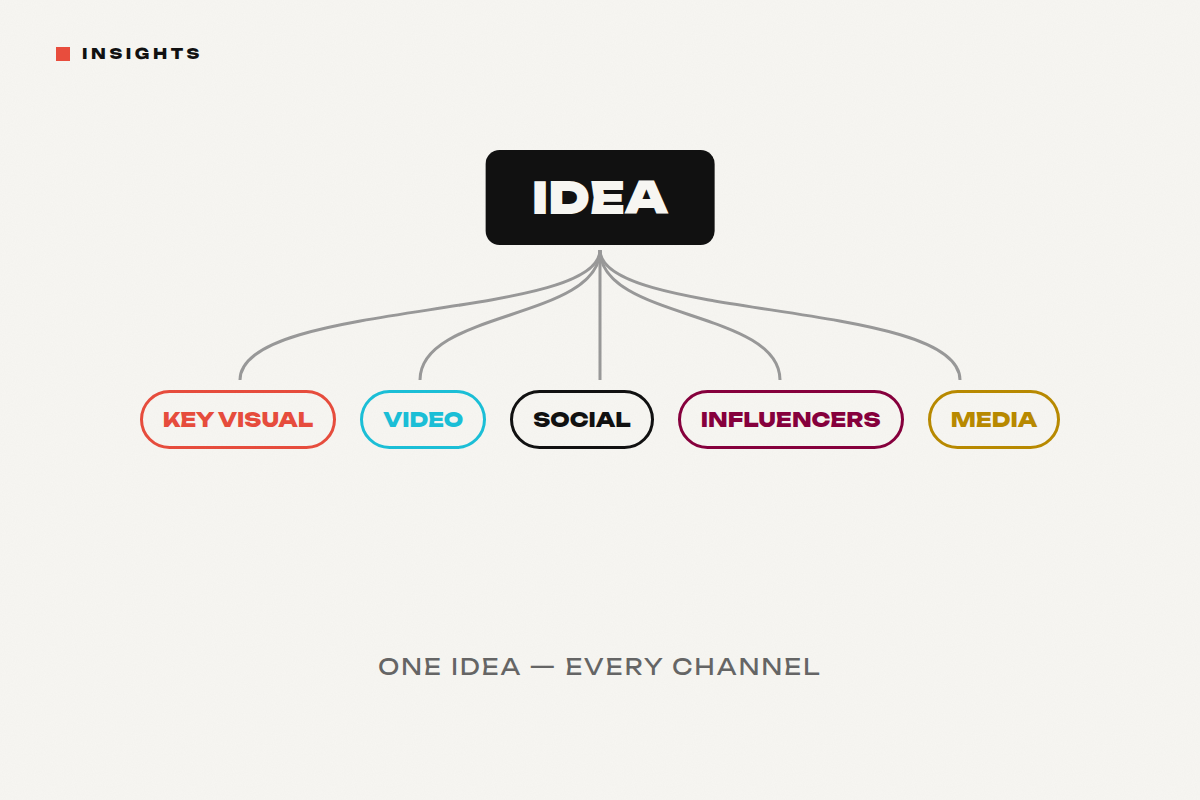
Regular content keeps the brand present. A campaign is a concentrated effort — one idea, one objective, one period — expressed across many touchpoints at once.
A client once showed us a competitor’s launch and asked, “why does their content feel bigger than ours?” The answer wasn’t the content. It was that the competitor wasn’t posting content — they were running a campaign.
Content is a rhythm. A campaign is an event.
Day-to-day content is the heartbeat: steady, familiar, sustainable. A campaign interrupts the rhythm on purpose. It starts with a specific objective — launch this product, own this season, shift this perception — and builds a dedicated idea around it: a key message, a visual world, a set of assets designed together, released together, and measured together.
The anatomy of a campaign
When we build a campaign at Ideative, the sequence matters: insight about the audience and the moment; a concept that turns the insight into one strong idea; art direction that gives the idea a look; production — photography, video, design; then rollout across social, influencers, paid media and any other touchpoint that fits. Every asset is a variation of the same idea, which is exactly why campaigns feel “bigger” — the audience meets one thought many times, instead of many thoughts once.
Ten posts about ten things is content. Ten touchpoints about one thing is a campaign.
A local example
Our Saudi National Day work for Audela Perfumes wasn’t a post — it was custom fashion design, photography, art direction and social content built around a single concept for a single cultural moment. That concentration is what audiences remember.
What this means for brands
You don’t need a campaign every month. You need campaigns at moments that deserve concentration — launches, seasons, Ramadan, National Day — sitting on top of a consistent content baseline. If everything is always “on,” nothing ever stands out.
See how we build them: Campaign Development at Ideative.
Professional Photography vs iPhone Content: Your Brand Needs Both
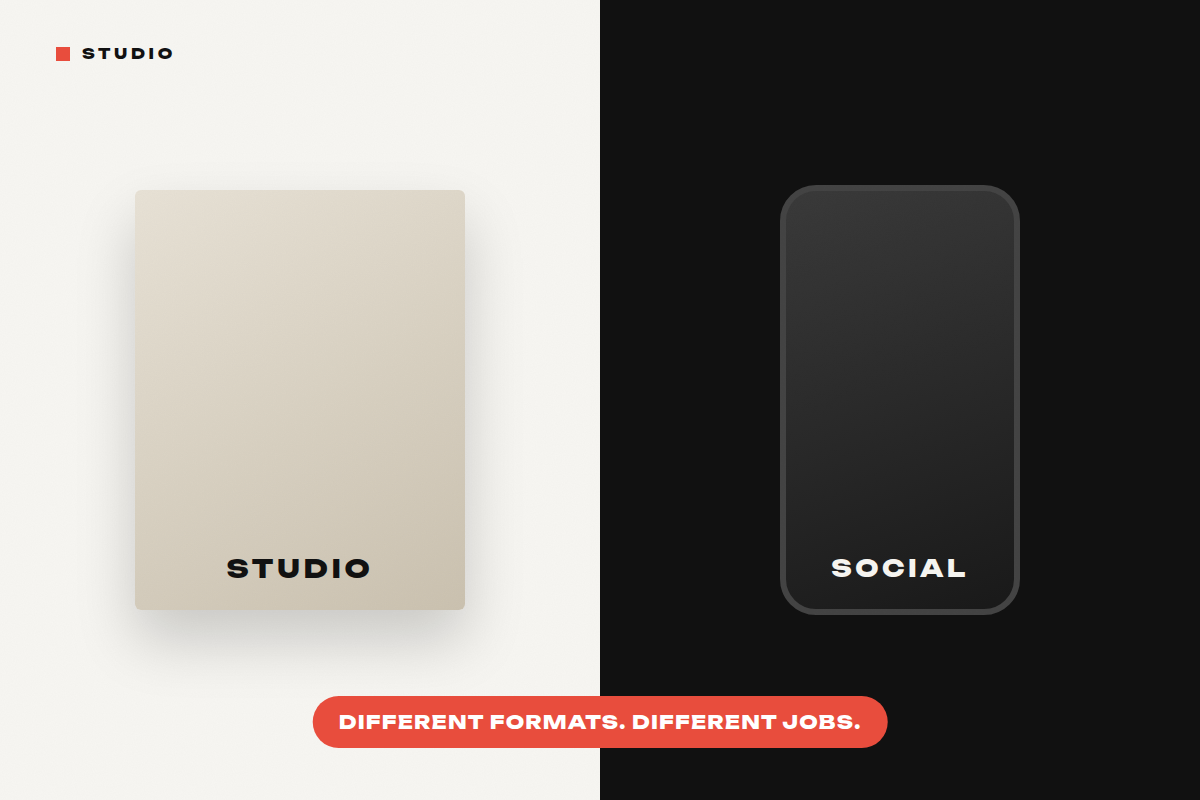
Studio photography and phone-shot social content do different jobs. Polished assets build perceived value; native content builds relatability and frequency. Healthy brands run both, on purpose.
“Phones are so good now — why do we still pay for photography?” Fair question. Here is the honest answer from a team that shoots both.
What professional photography does
Controlled lighting, styling, art direction and retouching produce assets with a specific commercial function: they set the brand’s ceiling. Campaign key visuals, packaging shots, menu heroes, website imagery — these are the images that make a customer decide, often unconsciously, what your product should cost. That perception is built in the details a production controls and a quick phone shot cannot.
What phone content does
Social-first content shot on a phone has a different superpower: it feels present. Behind the scenes, quick reactions, creator-style videos, daily stories — formats where polish would actually work against you. Platforms reward native-feeling content, and audiences trust it precisely because it looks like it was made today, not manufactured last quarter.
Studio content makes people respect the brand. Phone content makes people feel close to it.
The mistake is choosing
Brands that shoot only in studio feel distant and slightly frozen. Brands that shoot only on phones feel active but never quite premium. The strongest feeds we manage alternate deliberately: a foundation of directed, high-production assets, surrounded by fast, human, platform-native content — both following the same brand direction so the feed still feels like one voice.
What this means for brands
Plan both in the same calendar. Use production days to build a library of premium assets that lasts months, and keep a lightweight rhythm of native content between them. Different formats. Different jobs. One brand.
Ideative Studio handles both ends — full productions and social-first content systems.
Why Art Direction Matters More Than the Camera
“Which camera do you shoot with?” is a question we get on almost every production. It is the least important question in the room.
What actually makes the image
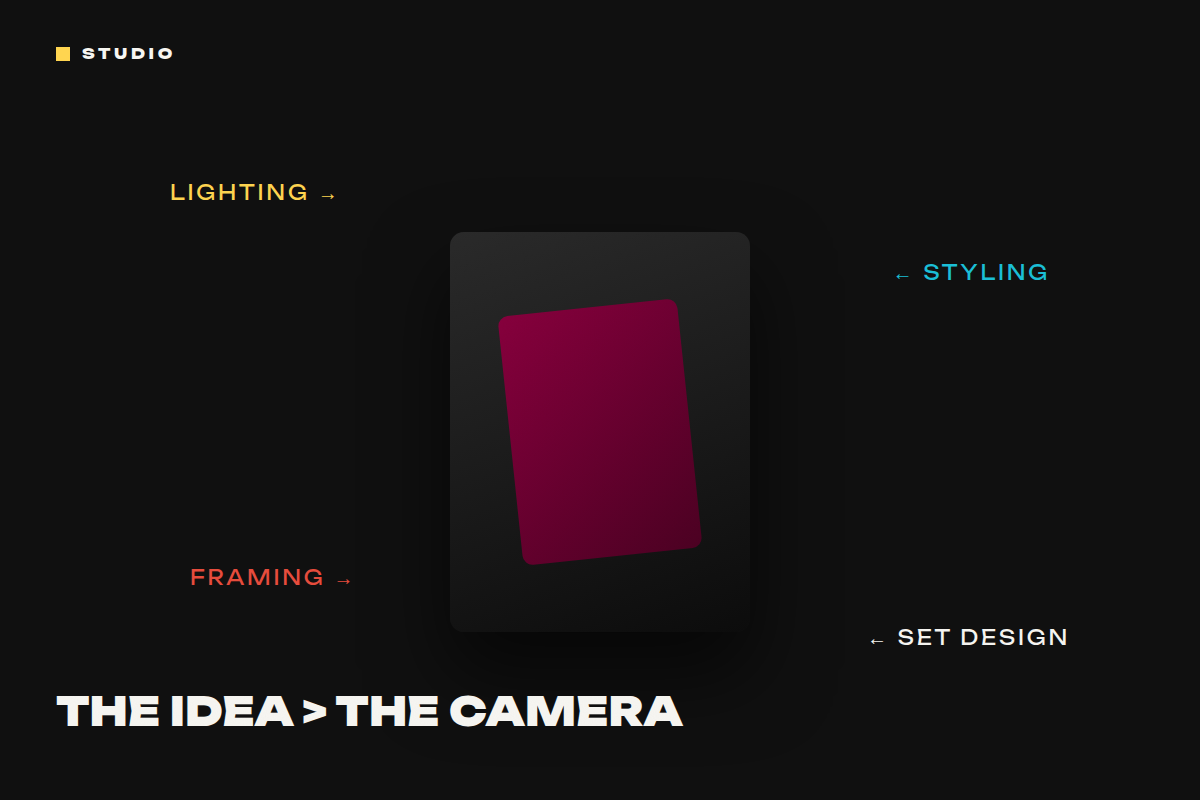
Before the shutter clicks on any strong product photograph, a series of decisions has already determined ninety percent of the result. The concept: what feeling should this image create? The lighting: hard or soft, warm or cold, drama or clarity? The styling: what surrounds the product, and what was deliberately removed? The framing and composition: where does the eye land first, and where does it travel? The set: colour, texture, depth. The camera’s job is to record those decisions accurately. Any good camera can do it. No camera can make them.
Great images are directed, then captured — in that order.
Proof you already know
Everyone has seen a stunning photo shot on a phone and a lifeless one shot on equipment worth a car. The difference was never the sensor. It was whether someone decided what the image should say before pressing anything. That deciding is art direction, and it is a craft — built from references, taste, brand understanding and hundreds of previous shoots.
What art direction looks like in practice
On our productions at Ideative Studio, shoot day is the middle of the process, not the start. Before it: moodboards, references, a shot list, styling decisions, propping, and a visual direction agreed with the client. On the day: adjusting light, rearranging a scene by centimetres, knowing when a frame is almost right and what tiny change fixes it. After: retouching that supports the direction instead of decorating it.
What this means for brands
When you evaluate photography — an agency’s, or your own — don’t ask about equipment. Look at intention. Does every image feel like a decision, or an accident? Brands whose visuals feel premium are not shooting with rarer cameras. They are shooting with clearer ideas.
Photography, videography and art direction live at Ideative Studio.
Why Brand Guidelines Matter
Here is a scenario we see constantly. A company has a good logo and a decent look. Then the team grows. A freelancer designs a menu. A media buyer builds ads. A new hire makes social posts. Six months later the brand looks like six different companies wearing the same logo.
Nobody did anything wrong. They just had nothing to follow.
What guidelines actually do
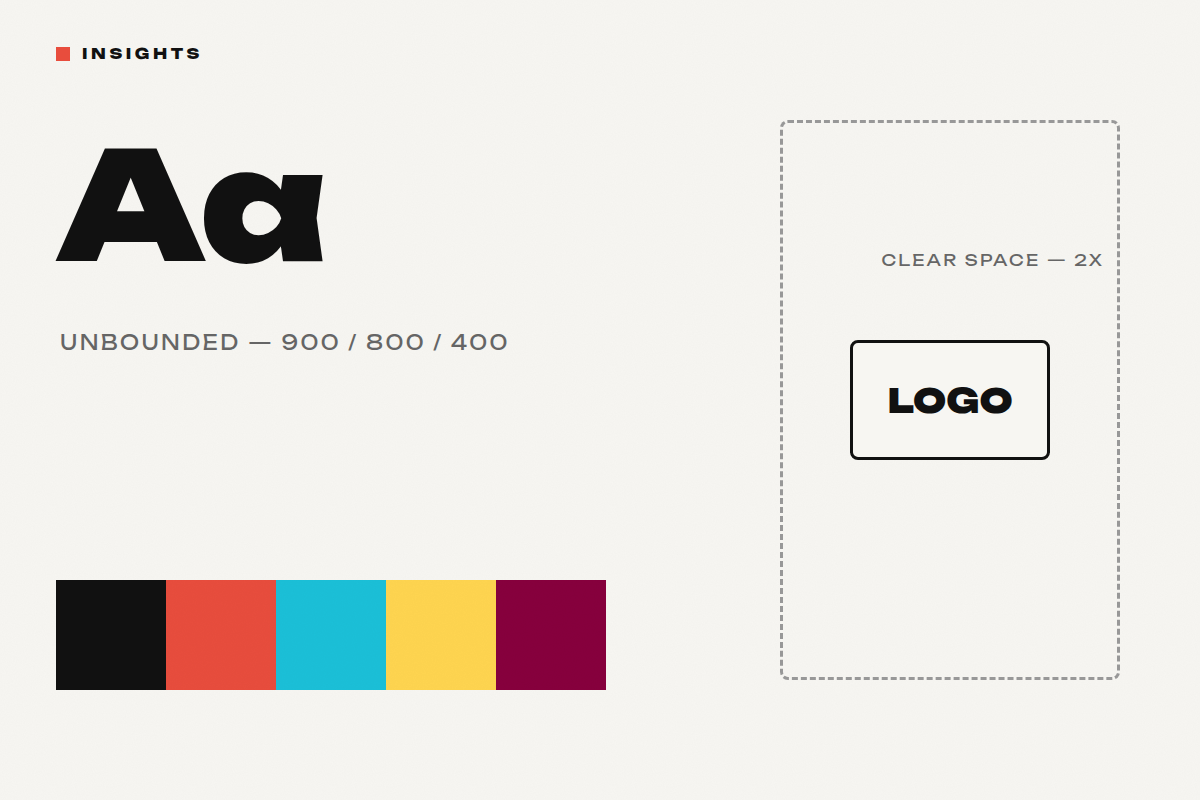
Brand guidelines turn taste into rules that travel. They define the logo and its clear space, the exact colours and when to use them, the typography hierarchy, the photography and image direction, the graphic elements, and the voice — with real examples of right and wrong. Good guidelines are less about restriction and more about speed: every designer, agency or intern starts from the answer instead of guessing.
A brand guideline is the difference between a brand and a logo with luck.
The compounding effect
Consistency is not an aesthetic preference — it is how recognition gets built. Every touchpoint that follows the system deposits into the same account. Every touchpoint that improvises makes a small withdrawal. Over a year, the difference between brands people recognise instantly and brands people scroll past is usually not budget. It is discipline — written down.
When you know it’s time
You need guidelines when more than one person creates for the brand, when you work with any external partner, when your feed looks different month to month, or when you catch yourself saying “that doesn’t feel like us” without being able to explain why. That feeling is the absence of a written system.
What this means for brands
Guidelines are not a document you commission for the shelf. They are operational infrastructure — as practical as your CRM. If your brand is growing, they are the cheapest insurance you will ever buy against slowly becoming generic.
We build brand guidelines as part of Branding at Ideative.
A Logo Is Not a Brand
When a company tells us “we need branding,” the next sentence is usually about a logo. It makes sense — the logo is the part of a brand you can point at. But it is a signature, not the person signing.
What a brand actually is
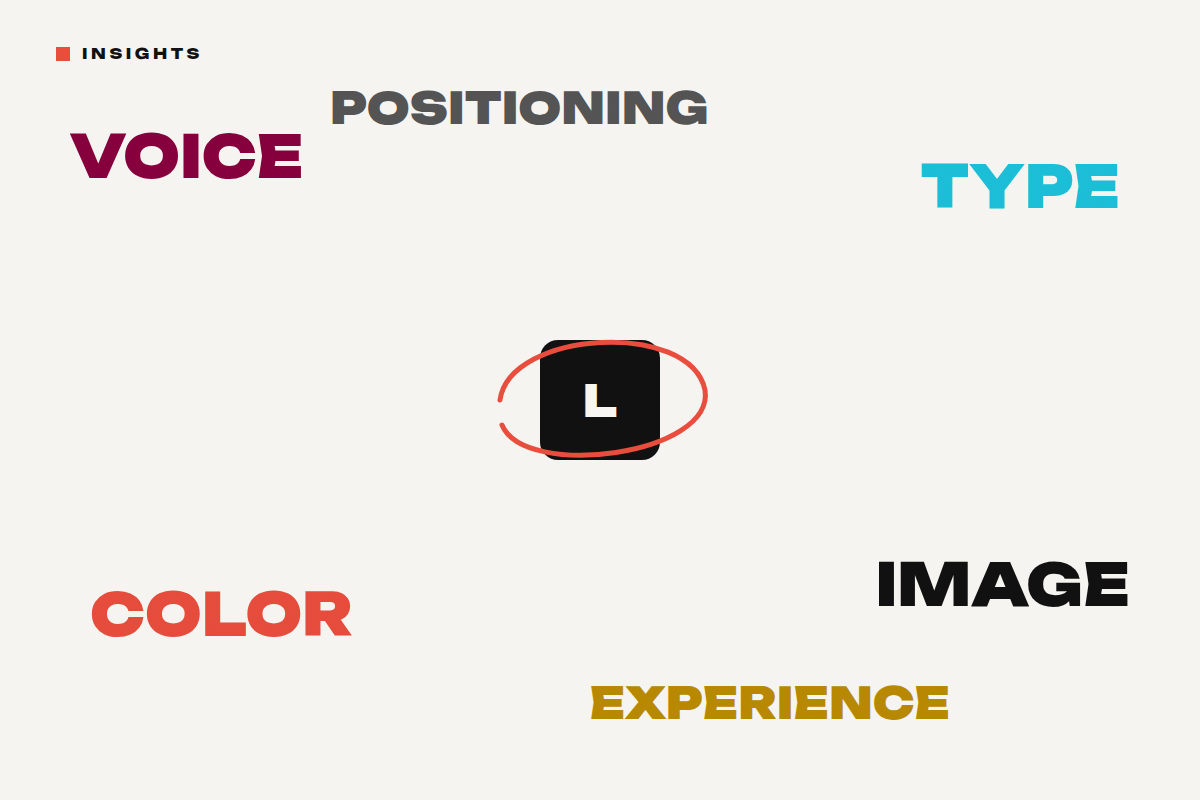
A brand is the sum of decisions that shape how people perceive a business. Positioning: what you stand for and against. Visual language: typography, colour, photography style, graphic elements — the system the logo lives inside. Tone of voice: how the brand sounds in a caption, a complaint reply, a job ad. And experience: what it feels like to walk in, order, unbox, or scroll your feed. The logo appears in all of it. It carries almost none of it alone.
People don’t fall in love with a mark. They fall in love with what it consistently stands for.
The test
Cover the logo on your latest campaign, your packaging, your feed. Would people still know it’s you? Strong brands pass this test easily — the typography, colour, photography and voice carry the identity. If everything collapses without the logo, you don’t have a brand system. You have a mark and a collection of unrelated decisions.
Why this matters commercially
A logo redesign changes one asset. A brand system changes how every future asset gets made — every post, menu, package and campaign starts from a defined position instead of a blank page. That is why brand identity work pays for itself: it makes every subsequent piece of marketing cheaper to produce and stronger when it lands. It is also why some brands look expensive before you ever see a price — restraint, consistency and art direction communicate value without saying a word.
What this means for brands
If your identity feels inconsistent, don’t start by redrawing the logo. Start by asking what the brand stands for, how it should sound, and what visual system can carry that everywhere. Sometimes the logo barely changes — and everything around it transforms.
Brand identity, guidelines and packaging are part of Branding at Ideative.
Why Posting Regularly Matters — And Why Posting Every Day Doesn’t
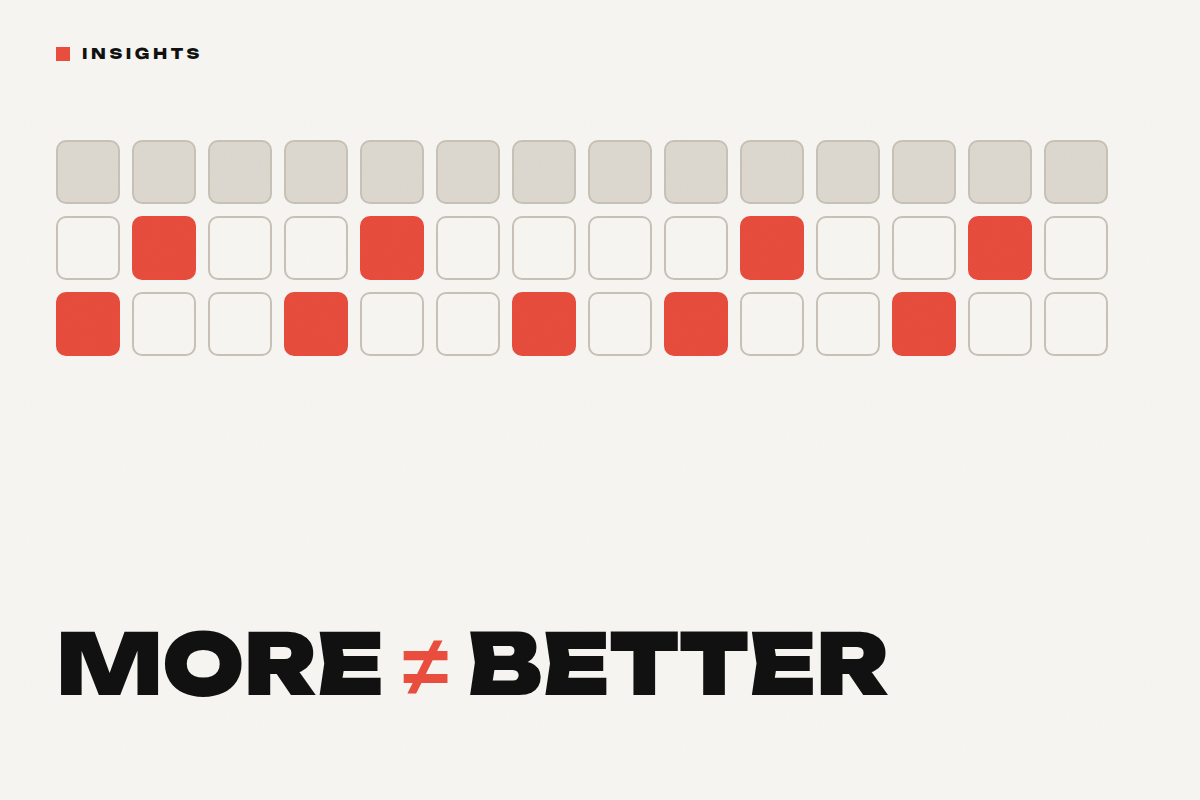
Post consistently — on a rhythm your team can sustain with quality. Posting daily only helps if every post earns its place. More is not a strategy.
“Should we post every day?” is one of the most common questions we get. The honest answer: probably not — and the fact that you are asking about frequency first is usually the real problem.
Why regularity works
Consistency does three things volume cannot. It builds recognition — the audience starts to know your voice, your look, your rhythm. It compounds — every post reinforces the last one instead of starting from zero. And it produces data — a regular stream of comparable content tells you what your audience actually responds to. Random bursts of activity, followed by silence, produce none of that.
Why daily posting backfires
When frequency becomes the goal, quality becomes the casualty. Teams start publishing to fill slots. The feed fills with content that exists because Tuesday exists. The audience feels the drop before you see it in the numbers — they stop saving, stop sharing, and eventually stop stopping.
Nobody follows a brand because it posts a lot. People follow brands that are worth hearing from.
Finding your rhythm
The right frequency is the intersection of three things: how much genuinely good content your brand can produce, what each platform rewards, and what your audience actually wants from you. For some brands that is five posts a week. For others, two strong posts beat seven forgettable ones — every time. When we build content plans, we would rather cut a post than publish filler, because every weak post spends a little of the audience’s attention for nothing.
What this means for brands
Stop asking “how often should we post?” and start asking “what is worth posting?” Build content pillars, set a rhythm you can sustain for six months, and let quality set the ceiling on quantity — never the other way around.
This is exactly the discipline behind our Social Media Management work.