
Boost Post vs Real Media Buying: They’re Not the Same Thing
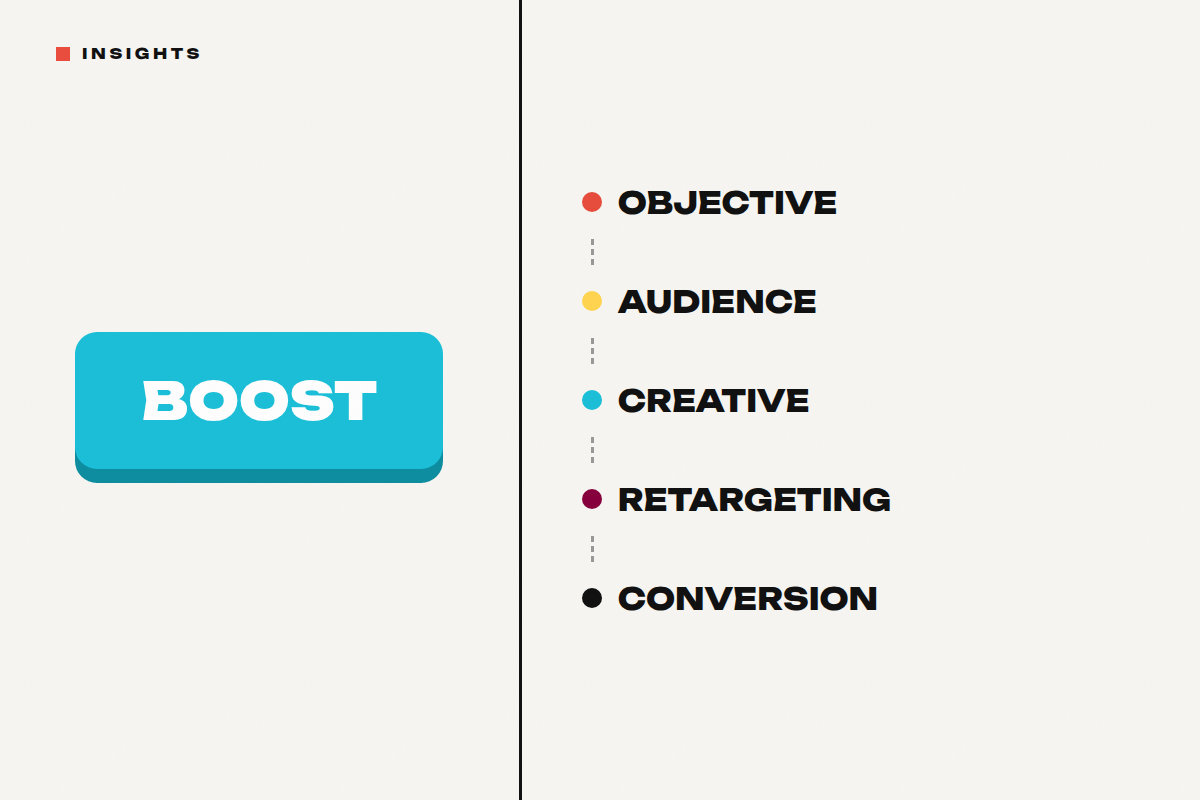
Boosting puts money behind a post. Media buying builds a system: objective, audience, creative, placements, retargeting, measurement. One is a button; the other is a discipline.
“Why can’t we just boost the post?”
You can. Sometimes you even should. But if boosting is your whole paid strategy, you are paying platform prices for a fraction of platform capability.
What boosting actually does
Boosting takes an existing post and shows it to more people. It is fast, simple, and fine for one narrow job: giving a strong organic post extra reach. What it does not give you is real objective selection, structured audiences, placement control, proper retargeting, creative testing, or measurement beyond surface metrics.
What media buying actually is
A real paid campaign starts before any money is spent. What is the objective — awareness, traffic, leads, sales? Who exactly are we trying to reach, and what do we already know about them? Which creative will carry the message, and in which formats and placements? Who saw it and didn’t act — and how do we bring them back? What are we measuring, and what number decides whether this worked?
Boosting spends budget on a post. Media buying invests budget in an outcome.
The retargeting difference
The clearest gap is retargeting. A boosted post reaches people once. A structured campaign builds audiences from everyone who watched, clicked or visited — and speaks to them again with a different message. That second conversation is where much of the performance in paid media actually lives, and the boost button simply does not have it.
What this means for brands
Use boosting for what it is: an amplifier for content that already proved itself. The moment you have a business objective and a real budget, you need structure — objectives, audiences, creative, retargeting and honest reporting. That is a different job, and it deserves a different tool.
Media planning and buying is part of our Digital Marketing service.
