
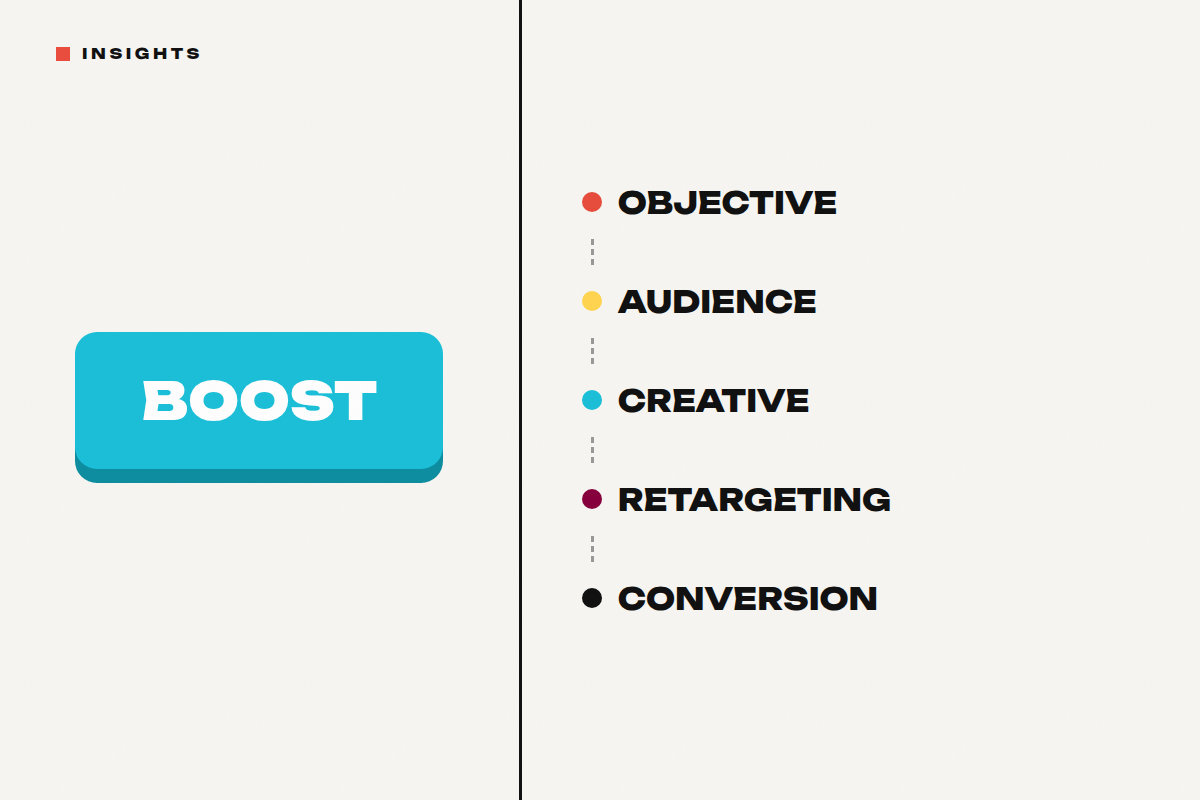
Boost Post vs Real Media Buying: They’re Not the Same Thing
Boosting puts money behind a post. Media buying builds a system: objective, audience, creative, placements, retargeting, measurement. One is a button; the other is a discipline.
“Why can’t we just boost the post?”
You can. Sometimes you even should. But if boosting is your whole paid strategy, you are paying platform prices for a fraction of platform capability.
What boosting actually does
Boosting takes an existing post and shows it to more people. It is fast, simple, and fine for one narrow job: giving a strong organic post extra reach. What it does not give you is real objective selection, structured audiences, placement control, proper retargeting, creative testing, or measurement beyond surface metrics.
What media buying actually is
A real paid campaign starts before any money is spent. What is the objective — awareness, traffic, leads, sales? Who exactly are we trying to reach, and what do we already know about them? Which creative will carry the message, and in which formats and placements? Who saw it and didn’t act — and how do we bring them back? What are we measuring, and what number decides whether this worked?
Boosting spends budget on a post. Media buying invests budget in an outcome.
The retargeting difference
The clearest gap is retargeting. A boosted post reaches people once. A structured campaign builds audiences from everyone who watched, clicked or visited — and speaks to them again with a different message. That second conversation is where much of the performance in paid media actually lives, and the boost button simply does not have it.
What this means for brands
Use boosting for what it is: an amplifier for content that already proved itself. The moment you have a business objective and a real budget, you need structure — objectives, audiences, creative, retargeting and honest reporting. That is a different job, and it deserves a different tool.
Media planning and buying is part of our Digital Marketing service.

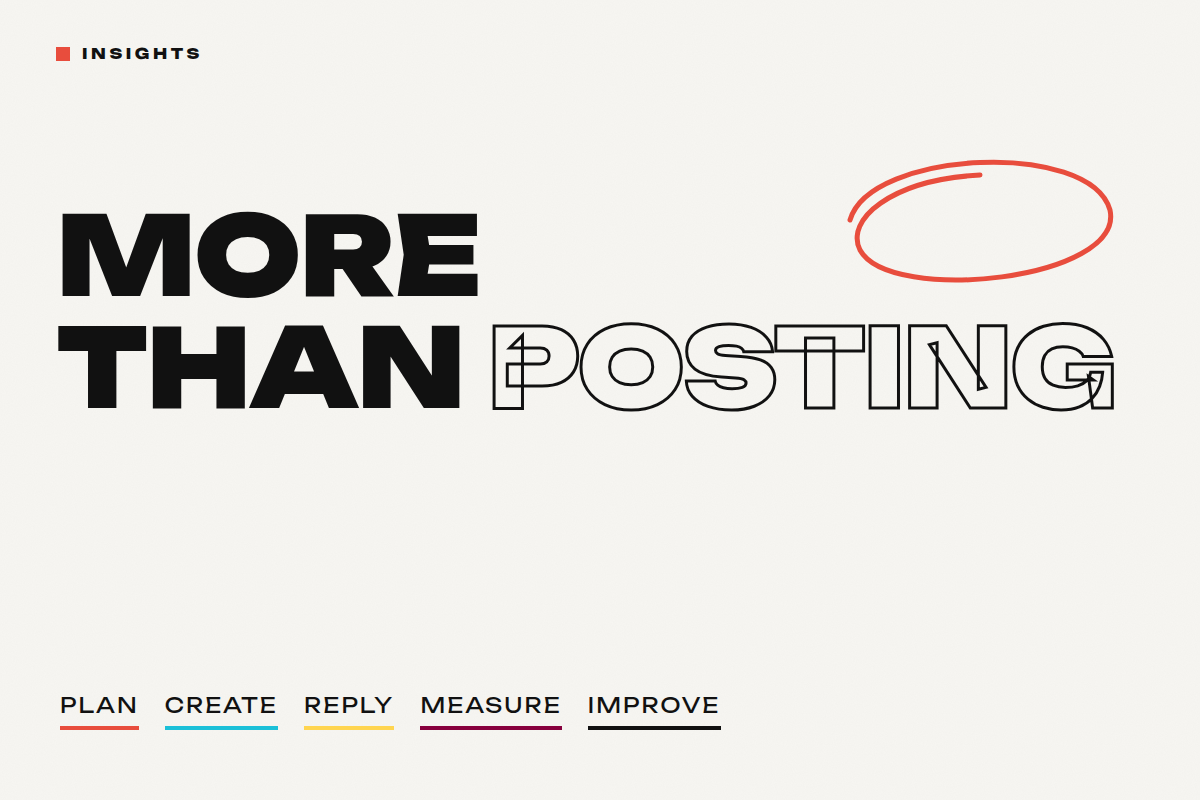
Why Social Media Management Matters More Than Just Posting
Posting is one small part of social media management. The real work is deciding what the brand should say, to whom, how often, in what voice — and then reading the data and improving every month.
Posting isn’t social media management. It’s one small part of it.
We say this in almost every first meeting, because most brands come to us thinking they need “someone to post.” What they actually need is someone to decide what is worth posting — and why.
What the audience never sees
Behind every account that feels consistent and alive, there is a layer of work the audience never sees: a strategy that defines what the brand talks about and what it stays away from, content pillars that stop the feed becoming random, a calendar that aligns content with launches, seasons and campaigns, copy written in one recognisable voice, design that follows the brand system, and community management that treats comments and DMs as part of the brand experience — not an afterthought.
Then there is the part most people skip entirely: reporting and optimisation. Looking at what performed, understanding why, and letting that change next month’s plan. Without that loop, an account just produces content. With it, the account learns.
An account that posts without a plan is busy. An account that is managed is going somewhere.
Why “just posting” quietly fails
A feed that is only fed, never managed, develops predictable symptoms. The content becomes reactive — whatever was available that week. The visual identity drifts because every post is designed in isolation. Engagement drops and nobody knows why, because nobody is measuring. And the account slowly stops looking like a brand and starts looking like a noticeboard.
None of this happens because the person posting is lazy. It happens because posting was treated as the job, when it is actually the last step of the job.
What this means for brands
If you are evaluating an agency — or your own internal team — don’t ask how many posts per month. Ask what the content pillars are. Ask how community messages are handled and how fast. Ask what changed in the strategy over the last three months because of performance data. The answers tell you whether the account is being managed or just filled.
Consistency, voice, community and learning — that is the job. Posting is simply the part you can see.
Ideative manages social media accounts end to end — strategy, content, community and reporting — for brands across Saudi Arabia. See our Social Media Management service.
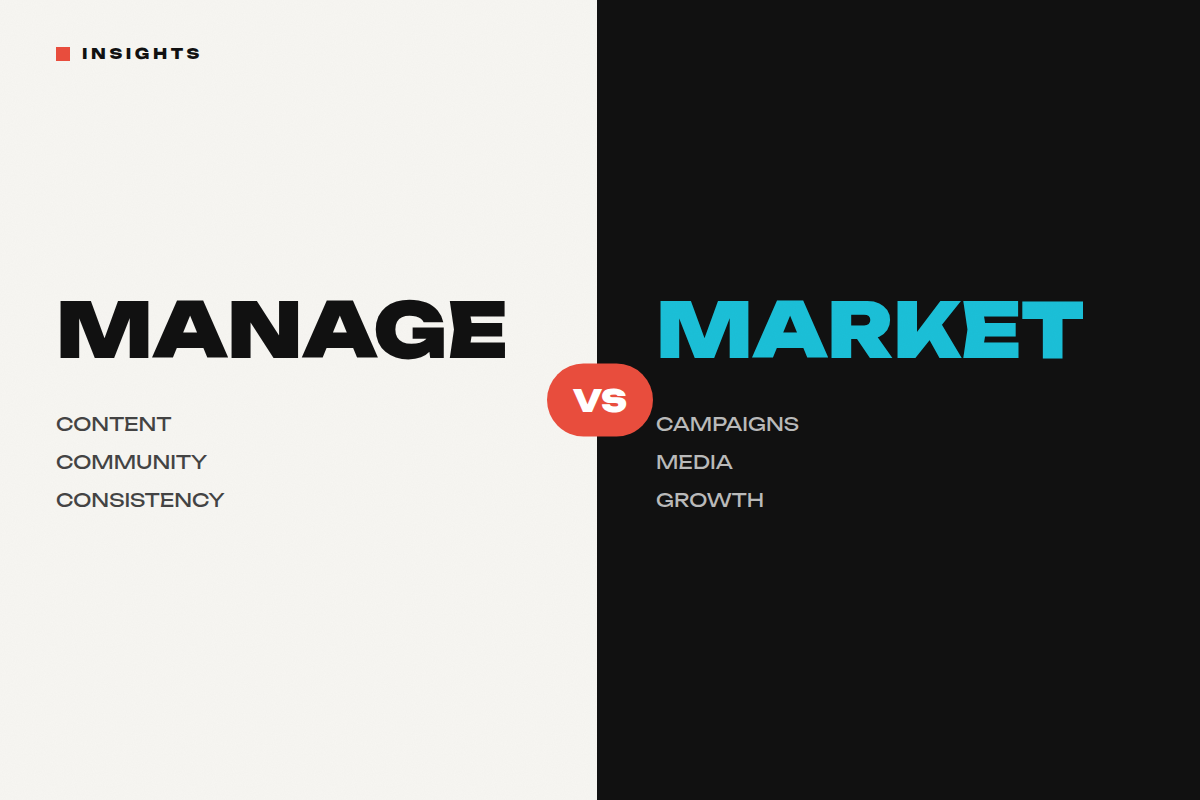
Social Media Management vs Social Media Marketing: What’s the Difference?
Management maintains and builds the brand’s ongoing presence: content, publishing, community, consistency. Marketing actively uses the platforms to achieve a business objective: campaigns, paid media, influencers, conversions. They overlap, but they are not the same job.
“But aren’t you already doing our social media?”
We hear this whenever we recommend a paid campaign to a client whose account we already manage. It is a fair question, and the confusion comes from one word — “social” — describing two different jobs.
Management is the presence
Social media management is everything that keeps a brand present, consistent and alive on its channels. Think of a restaurant account we manage: monthly content planning, photography, captions in the right voice, publishing on schedule, replying to comments and DMs, monthly reporting. The objective is long-term: familiarity, trust, and an audience that knows exactly who you are.
Marketing is the push
Social media marketing takes that presence and puts force behind it for a specific outcome. A product launch that needs reach beyond your followers. A seasonal campaign with a conversion target. An influencer collaboration built to reach a new audience. Paid media with defined objectives, audiences and budgets. The objective is specific and measurable, and it usually has a deadline.
Management builds the house. Marketing invites the city over.
A real example
When we ran the Saudi National Day campaign for Audela Perfumes, the ongoing account management did not stop — the daily presence continued. The campaign sat on top of it: a concept, custom fashion design, photography, art direction and content built for one cultural moment. Two jobs, running together, each doing what the other cannot.
What this means for brands
If your account is inconsistent, your problem is management. If your account is healthy but the business needs more — more reach, more leads, more sales — your next investment is marketing. And if someone sells you “social media” without asking which problem you have, ask more questions.
We do both — ongoing management and objective-driven campaigns. Explore Digital Marketing at Ideative or see how we build campaigns.
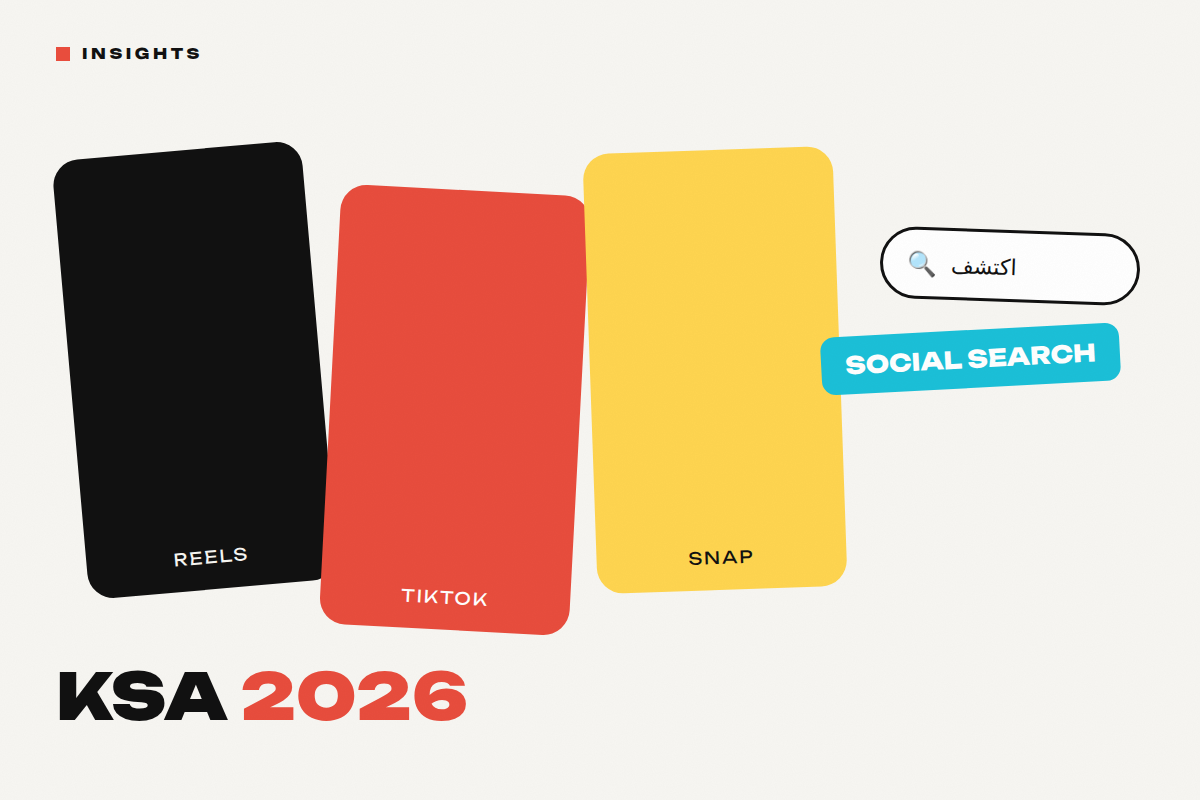
5 social media shifts Saudi brands cannot ignore this year
Every year the feed changes, and every year some brands keep posting like it is three years ago. Here are the five shifts we are seeing across our clients’ accounts in Saudi — backed by what the numbers, not the trends lists, say.
1. Lo-fi beats over-produced — but only with a strategy
Audiences skip anything that smells like an ad. Phone-shot, face-to-camera, behind-the-scenes content consistently outperforms polished commercials on reach — but it converts only when it sits on a real content strategy. Random authenticity is still random.
2. Saudi identity is the strongest creative angle
National Day, Founding Day, Riyadh Season, local humor, local dialect — content rooted in Saudi culture earns shares that generic global content never will. The winners are brands that celebrate the culture all year, not two days a year.
3. Search moved into the platforms
TikTok and Instagram are now discovery engines. Captions, on-screen text and audio all get indexed. Treat every post title like a search query — because for your customers, it is one.
4. Creators over celebrities
Mid-size Saudi creators with loyal niche audiences deliver better cost-per-result than mega influencers in almost every campaign we run. Fit beats fame.
5. Community is the new reach
Replies, DMs, polls, WhatsApp channels — the brands growing fastest treat social as a two-way room, not a billboard. Response time is now part of your brand identity.
Want your account run like this? See what we do or start a conversation.
Why an in-house studio changes everything for your brand
Most agencies plan your content, then send the shoot to a third party. Every handoff costs you three things: time, money and consistency. That is exactly why we built Ideative Studio — our own production division under the same roof as our strategy and marketing teams.
Speed: from idea to asset in days
When the strategist, the designer and the photographer share one office, a campaign idea approved on Sunday can be shot on Tuesday and live by Thursday. No briefs lost in translation, no waiting for external calendars. 100% of our production happens in-house — which is why our timelines are short.
Consistency: one visual language
Your grid should look like one brand shot it. In-house production means the same lighting philosophy, the same color grading, the same eye across every product shot, reel and campaign — for every post, all year.
Cost: production that scales with you
Outsourced shoots are priced per project, every time. An integrated studio spreads that cost across a retainer: more content, more formats, from the same budget. One shoot day becomes a month of content when it is planned by the same team that runs your calendar.
Craft: details handled with intention
From product shots to lifestyle content — lighting, styling, direction and editing are handled with intention and emotion. Not just beautiful visuals: every image is a narrative that reflects the heart of the brand.
See the work at ideative-studio.com — or book a shoot.
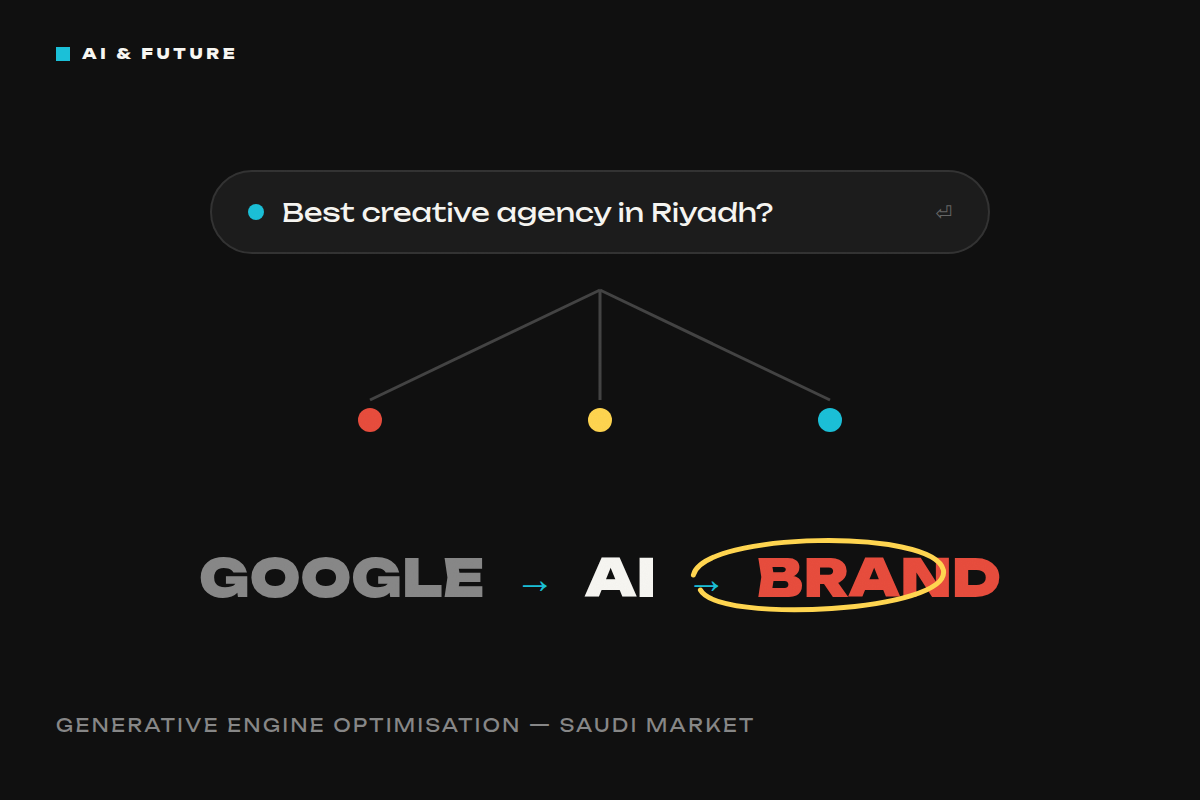
GEO is the new SEO: how Saudi brands get recommended by AI in 2026
Ask yourself a simple question: when a customer in Riyadh asks an AI assistant "who is the best coffee brand in Saudi?" — does your name come up?
Search changed. A growing share of discovery now happens inside AI answers, not in a list of ten blue links. That shift created a new discipline: Generative Engine Optimization (GEO) — making sure AI engines know who you are, what you do, and why you are credible enough to recommend.
Why GEO matters in Saudi right now
Saudi Arabia has one of the highest AI-adoption rates in the region. Your customers ask AI for restaurant picks, agency shortlists, product comparisons and gift ideas — in Arabic and English. Brands that are invisible to AI engines are quietly losing recommendations every day, and they never see it in their analytics.
What actually moves the needle
1. Structured, factual content. AI engines trust pages that state clearly what you do, where you operate, and what you have done — with schema markup underneath.
2. Bilingual authority. Publish real answers in Arabic and English. AI pulls from both, and most of your competitors only write in one.
3. Consistent entity signals. Same name, same description, same links across your website, Google Business Profile, LinkedIn and press mentions. AI cross-checks.
4. Proof, not adjectives. "5M+ organic views from a single campaign" beats "we are creative and passionate" — engines quote numbers.
How we build GEO into every website
At Ideative we bake GEO into the foundations: clean structure, bilingual content, Organization and Service schema, FAQ pages written the way people actually ask, and case studies with real results. The goal is simple — when someone asks AI for the best at what you do, the answer is you.
Want a GEO audit of your brand? Talk to us.